
Inkberrow Primary School Love to Learn, Learn to Care
Attendance
Leave of Absence during term time form - click here
When you complete your form, please email or hand it into the school office.
School Senior Attendance Champion: Mr. G. Duggan Seville
Attendance Officer: Mrs Nicola Taylor
Every Day Counts !
Every Child Matters!
At Inkberrow Primary School, we believe that regular attendance is one of the most important foundations for a child's success, both in school and in later life.
Every school day provides opportunities to learn, develop friendships, build confidence and experience our exciting curriculum. Missing school means missing valuable experiences that cannot always be repeated.
With 190 school days each year, we want every child to make the most of the opportunities available to them.
Our attendance approach is built on strong relationships, high expectations and working in partnership with families. We recognise that children sometimes face genuine barriers to attending school, particularly where there are medical needs, SEND or emotional difficulties. Our priority is always to work together, understand these challenges and provide the right support.
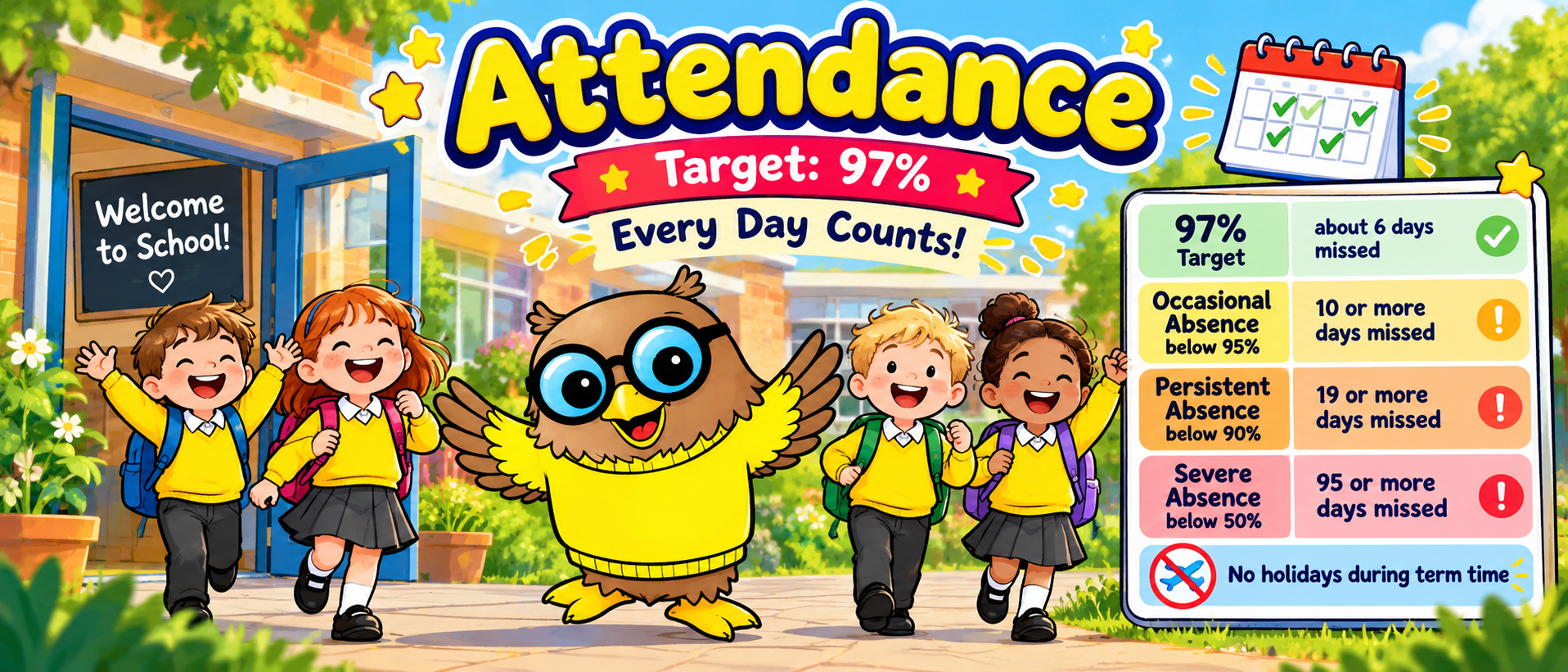
Our whole-school attendance target for 2026/27 is 97%.
Celebrating Our Attendance Successes – 2025/26
We are delighted that attendance continues to be a significant strength at Inkberrow. Our September 2026 inspection data report highlights that attendance remains above national comparators, including for vulnerable groups.
Some of our key successes include:
-
96.4% whole-school attendance – above the national comparator of 95.0% and an improvement on 95.9% in 2024/25.
-
95.7% attendance for pupils eligible for Free School Meals – significantly above the national comparator of 92.3%.
-
94.9% attendance for pupils with SEND – above the national comparator of 92.4%, reflecting our inclusive approach.
-
94.8% attendance for pupils with Education, Health and Care Plans (EHCPs) in our June 2026 monitoring report – considerably above the corresponding national comparator of 88.9%.
-
All year groups were attending above national average in our June 2026 monitoring report, with Reception and Year 4 particular strengths.
-
Persistent absence was just 4.5% in June 2026, demonstrating the positive impact of early identification, family engagement and targeted support.
These achievements are something for our whole school community to celebrate. They demonstrate the commitment of our children, families and staff to making every school day count.
Our challenge now is to build on these successes and achieve our ambitious target of 97% attendance.
Understanding Attendance
Attendance is measured across the school year. Even a relatively small number of missed days can have a significant impact.
| Attendance | Approximate days missed in 190 school days |
|---|---|
| 100% | 0 days |
| 97% – Our Target | 6 days |
| 95% | 9–10 days |
| 90% – Persistent Absence | 19 days |
| 50% – Severe Absence | 95 days |
Persistent absence means missing 10% or more of possible school sessions, whether authorised or unauthorised. Severe absence means missing 50% or more.
When a child's attendance begins to fall, we want to offer support early rather than wait for difficulties to become more significant.
Authorised and Unauthorised Absence – What Is the Difference?
Schools are legally required to record attendance twice daily, once in the morning and once in the afternoon. Each absence must be recorded using the appropriate national attendance code.
Authorised Absence
An authorised absence is one that the school has accepted under the statutory attendance regulations.
Examples include illness where a child is too unwell to attend, necessary medical appointments that cannot reasonably take place outside school hours, religious observance and exceptional circumstances agreed by the school.
If your child is unwell, please contact the school office on the first day of absence, providing the reason for their absence and when you expect them to return.
Where no explanation has been received, our office team will contact parents or carers as part of our safeguarding responsibilities. Additional welfare checks or home visits may be arranged if necessary.
We do not routinely require medical evidence for illness. However, where there is a genuine and reasonable need for clarification, we may discuss appropriate supporting information with families.
Unauthorised Absence
An unauthorised absence occurs when a child is absent without an accepted reason or when permission has not been granted.
Examples may include:
-
Family holidays or leisure trips during term time without authorisation.
-
Days off for birthdays, shopping or other optional activities.
-
Staying at home without a valid reason for absence.
-
Arriving after the attendance register has closed without an acceptable reason.
Parents and carers have a legal responsibility to ensure that children of compulsory school age receive a suitable education. Where children are registered at school, this normally means attending regularly and punctually.
Holidays During Term Time
School holidays are the time for family holidays.
Children attend school for 190 days each year, leaving approximately 175 days, including weekends and school holidays, when school is not in session.
Under national guidance, Headteachers may only authorise leave of absence in term time when exceptional circumstances apply. Family holidays, including overseas travel, are not normally considered exceptional.
Any request for leave must be submitted in writing in advance and will be considered individually. Taking a holiday without authorisation may result in a penalty notice.
Under the national framework introduced in August 2024, schools must consider a penalty notice where a pupil accumulates 10 sessions (five school days) of unauthorised absence within a rolling period of 10 school weeks.
A first penalty notice is £80 per parent, per child if paid within 21 days, increasing to £160 if paid within 28 days. A second notice within three years is £160, with further offences potentially resulting in prosecution.
Our preference will always be to work with families wherever support can help improve attendance, whilst applying statutory requirements fairly and consistently.
We Are Here to Help
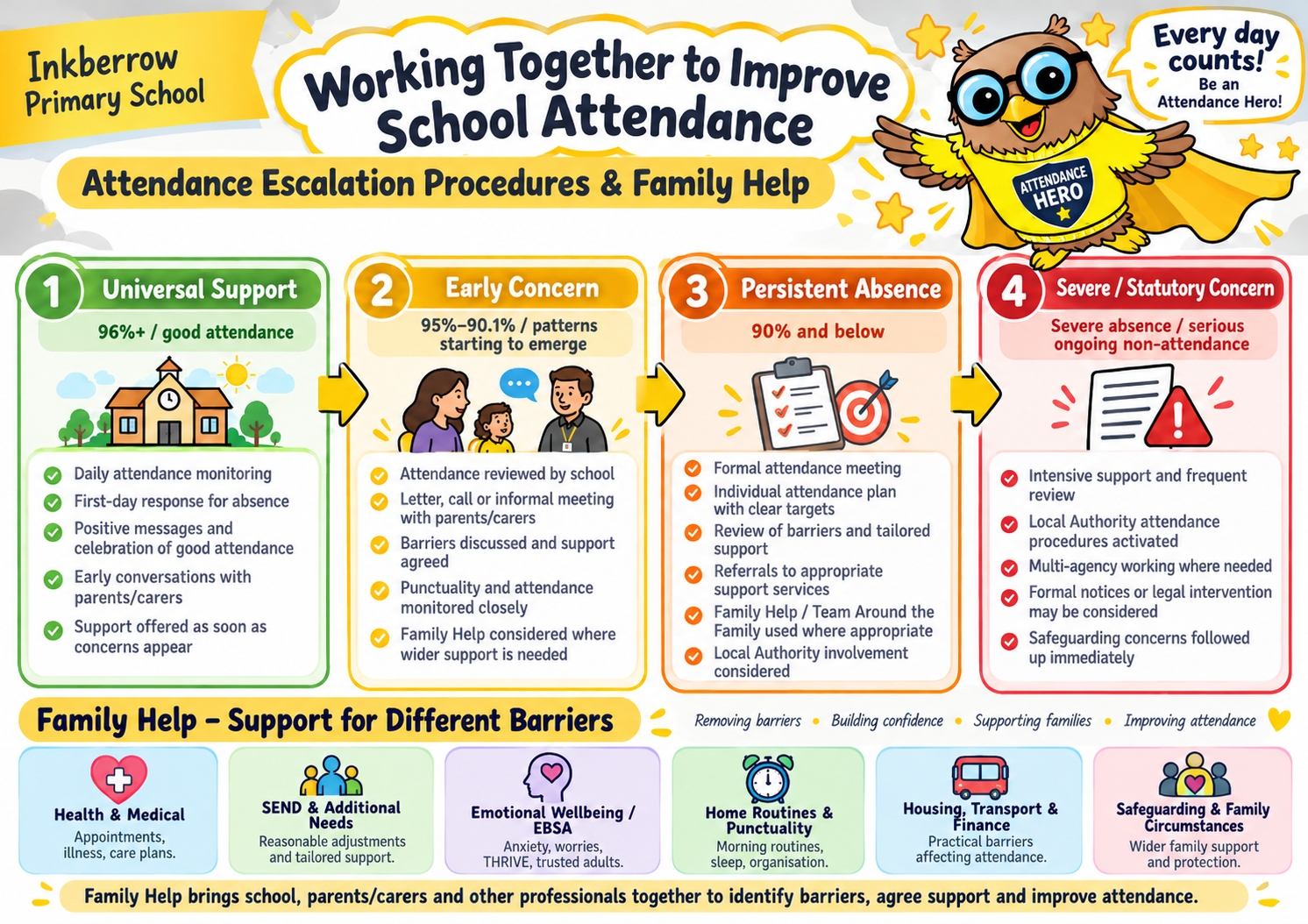
We understand that attending school regularly is not always straightforward for every child. (see our poster above)
Illness, anxiety, emotionally based school avoidance (EBSA), additional learning needs, disabilities or difficult family circumstances can all create challenges.
At Inkberrow, we will work alongside families to identify barriers, agree appropriate adjustments and develop supportive plans where needed. This may involve our pastoral team, SEND team, Family Help services or external professionals.
Please speak to us early if attendance is becoming difficult. Together, we can make a real difference.
Attendance HERO – Here, Every Day, Ready, On Time!
Thank you to our parents and carers for your continued support. By working together, we can ensure every child has the best possible opportunity to learn, belong, achieve and thrive.
190 Opportunities to Learn. Let's Make Every Day Count!